

Letztes Update am Mi., 16 Sep. 2026 16:44:03 +0200 von Andreas Potthoff
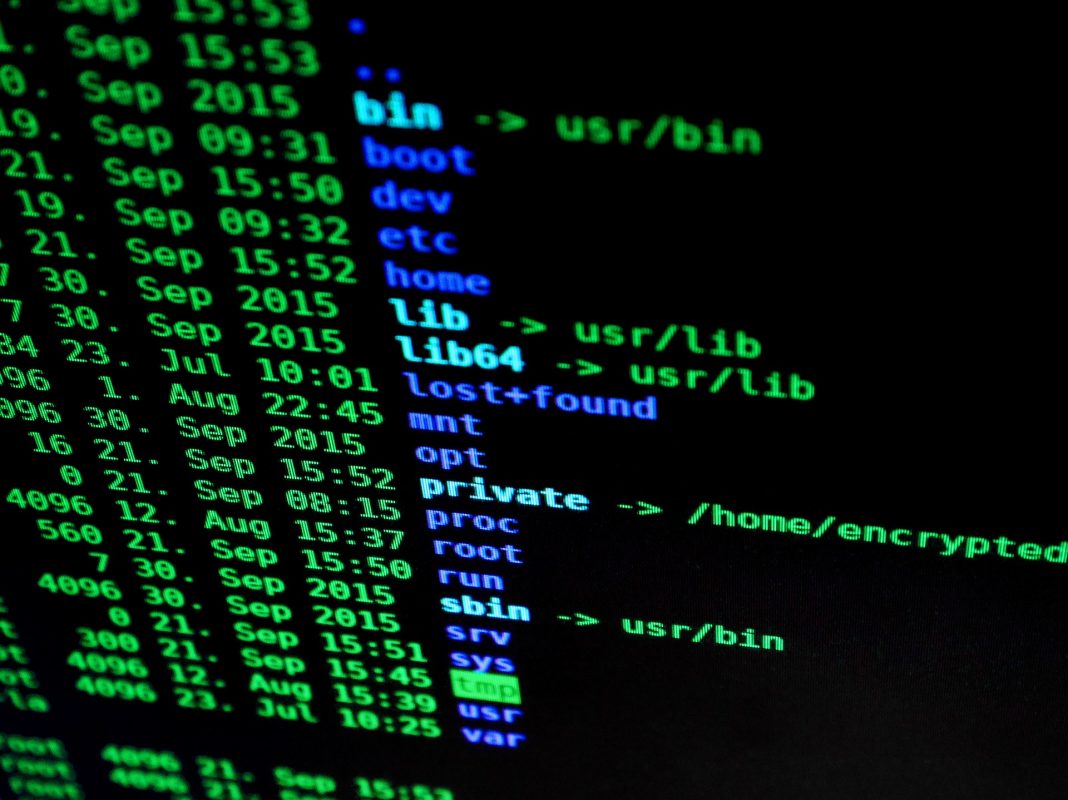
Dieser Beitrag beschreibt die typische Verzeichnisstruktur für Linux-Systeme, welche auf Debian basieren. Dazu gehören z.B.: Ubuntu, Raspberry Pi OS, Raspbian, Linux Mint, Kali Linux, Kubuntu, Proxmox u.v.m. Eine umfangreiche Liste von Debian based-Linux-Distributionen findet ihr hier: Distrowatch.com – Debian based
Alle elementaren Programme und Konfigurationsdateien liegen in verschiedenen Systemverzeichnissen. Anhand des Filesystem Hierarchie Standard (FHS) wird die Eingliederung der verschiedenen Dateiarten in die Verzeichnisstruktur gezeigt. Der FHS ist eine Richtlinie für die Verzeichnisstruktur unter Unix-ähnlichen Betriebssystemen.
Sie können den folgenden Informationen entnehmen, wo Sie Konfigurationsdateien finden, welche Verzeichnisse Programme enthalten und wo Dokumentationen zu finden sind.
Die folgende tabellarische Übersicht der Verzeichnisstruktur berücksichtigt nicht eine Installation mit gesonderten Partionen (z.B. boot, home, etc.). Außerdem wird Beschreibung der Dateisystem-Hierachie durch den Konsolenbefehl man (manual) gezeigt.
Tabelle Verzeichnisstruktur
Die wichtigsten Verzeichnisse haben folgende Bedeutungen bzw. Inhalte:
| Verzeichnis | Beschreibung |
|---|---|
| / | Wurzelverzeichnis: Das Wurzelverzeichnis und oberste Verzeichnis der Hierachie. |
| /bin | Systemprogramme: Die wichtigsten Systemkommandos. Dieses Verzeichnis darf keine Unterverzeichnisse enthalten. |
| /boot | Bootloader: Die statischen Dateien des Bootloaders und die Kernel. |
| /dev | Gerätedateien: Schnittstellen zur Ansteuerung der gesamten Hardware. |
| /etc | Systemkonfiguration: Die Konfigurationsdateien. |
| /etc/init.d | Start- und Stopscripte. |
| /etc/network | Konfigurationsdateien des Netzwerkes. z.B. interfaces |
| /etc/opt | Konfigurationsdateien für Programme im Verzeichnis /opt |
| /home/Benutzername | Heimatverzeichnis: Die eigenen Dateien. Für jeden Benutzer finden Sie einen eigenes Verzeichnis mit dem Benutzernamen. |
| /lib | Bibliotheken: Dynamische Bibliotheken und Kernelmodule die für den Systemstart notwendig sind. |
| /lib/modules | Kernelmodule |
| /lost+found | Verloren+Gefunden: Dateien und Dateifragmente die bei der Reparatur eines defekten Dateissystems übrig geblieben sind. |
| /media | Wechselmedien: Einhängepunkt und Unterverzeichnisse für transportable Medienspeicher (z.B. USB-Stick, externe Festplatte, Floppy, CD-ROM, DVD, u.a). |
| /mnt | Mountpunkt: Einhängepunkt für ein temporär eingehängtes Dateisystem. |
| /opt | Optional: Für die manuelle Installation von Programmen die ihre eigenen Bibliotheken mitbringen und nicht zum Standard der Distribution gehören. Unterverzeichnisse sind z.B. mincraft-pi, sonic-pi, vs, Wolfram |
| /proc | Prozess- und Systeminformationen: Schnittstellen zum aktuell geladenen Kernel und seinen Prozeduren. Dateien lassen sich mittel cat auslesen z.B. „cat proc/version“ gibt die aktuelle Kernelversion aus. |
| /root | Root Heimatverzeichnis: Das Heimatverzeichnis des Superusers (root). Das root-Verzeichnis liegt im Wurzelvereichnis, falls das home-Verzeichis auf eine andere Partiton ausgelagert wurde oder ein Zugriff auf home aus irgendeinem Grund nicht möglich ist. |
| /run | Prozesse: Dateien für laufende Prozesse. Hier befinden sich auch die meisten PID-Dateien (Process Identifier). |
| /sbin | Systemprogramme (root): Die Systemkommandos zur Systemverwaltung für die Rootrechte benötigt werden. Dieses Verzeichnis darf keine Unterverzeichnisse enthalten. |
| /srv | Systemdienste: Daten für Systemdienste (in der Regel leer). Dieses Verzeichnis ist noch nicht genau spezifiziert. |
| /sys | System: Systemweites Geräteverzeichnis welches Informationen und Statistiken über das System und die Komponenten enthält. |
| /tmp | Temporär: Temporäre Dateien von Programmen und Benutzern. Dieses Verzeichis wird nach jedem Neustart automatisch geleert. |
| /usr | UNIX Systemressourcen: Die meisten Systemprogramme, Bibliotheken und installierten Programme. |
| /usr/bin | Die meisten Benutzerbefehle. Das primäre Verzeichnis für ausführbare Dateien des Systems. |
| /usr/games | Spiele |
| /usr/include | Header-Dateien für C-Programme. |
| /usr/lib | Allgemeine Bibliotheken |
| /usr/local | Distributionsunabhängige lokale Hierachie enthält noch einmal die gleiche Verzeichnisstruktur wie das /usr Verzeichnis. Für Programme und Daten gedacht, die von der entsprechenden Distribution des jeweiligen Systems unabhängig installiert worden sind, wie etwa selbstkompilierte oder unabhängig von der Distribution heruntergeladene Programme und Dateien. |
| /usr/sbin | Weniger wichtige Systemprogramme die im Gegensatz zu /sbin nicht während des Bootvorganges verwendet werden. |
| /usr/share | Statische architekturunabhänge Dateien z.B. Dokumentationen, Manpages und Wörterbücher. |
| /usr/src | Source Code zu den Paketen. |
| /var | Variable Daten: Diese Daten entstehen z.B. im Zuge einer Abarbeitung |
| /var/backups | Sicherungskopien der Liste der installierten Programme (dpkg). |
| /var/cache | Zwischenspeicher von Programmen |
| /var/lib | Variable Statusinformationen |
| /var/local | Variable Daten im Zusammenhang mit /usr/local |
| /var/lock | Lock-Dateien zur Prozesssynchronisation |
| /var/log | Protokolldateien |
| /var/mail | Mailboxen der Benutzer |
| /var/opt | Variable Daten der optionalen Programme |
| /var/run | Dateien zu laufenden Prozessen |
| /var/spool | Von Programmen gespoolte Daten z.B. Druckaufträge. |
| /var/tmp | Variable Daten die zwischen Reboots erhalten bleiben. |
| /var/www | Standardverzeichnis für Inhalte des Webservers. |
Verzeichnisstruktur mit dem Konsolenbefehl tree anzeigen
Um sich einen Überblick der Verzeichnisstruktur zu verschaffen kann man den Konsolenbefehl tree benutzen:
Als erstes wechseln wir in das Wurzelverzeichnis und dann lassen wir uns den Verzeichnisbaum mit einer Leveltiefe von 1 anzeigen. Die Leveltiefe kann natürlich auch erweitert werden, indem man die 1 durch die gewünschte Tiefe ersetzt.
andreas@NUC6CAYH:~$ cd /
andreas@NUC6CAYH:/$ tree -L 1
.
├── bin -> usr/bin
├── boot
├── cdrom
├── dev
├── etc
├── home
├── lib -> usr/lib
├── lib64 -> usr/lib64
├── lost+found
├── media
├── mnt
├── opt
├── proc
├── root
├── run
├── sbin -> usr/sbin
├── snap
├── srv
├── swap.img
├── sys
├── tmp
├── usr
└── var

23 directories, 1 file
Beschreibung der Dateisystem-Hierachie mit dem Konsolenbefehl man (englisch)
Wenn Sie folgenden Konsolenbefehl eingeben:
man hier
erhalten Sie die Beschreibung der Dateisystem-Hierachie mit folgender Beispielausgabe:
hier(7)                           Miscellaneous Information Manual                          hier(7)

NAME
       hier - description of the filesystem hierarchy

DESCRIPTION
       A typical Linux system has, among others, the following directories:

       /      This is the root directory.  This is where the whole tree starts.

       /bin   This  directory contains executable programs which are needed in single user mode and
              to bring the system up or repair it.

       /boot  Contains static files for the boot loader.  This directory holds only the files which
              are needed during the boot process.  The map installer and configuration files should
              go to /sbin and /etc.  The operating system kernel (initrd for example) must  be  lo‐
              cated in either / or /boot.

       /dev   Special or device files, which refer to physical devices.  See mknod(1).

       /etc   Contains  configuration  files  which are local to the machine.  Some larger software
              packages, like X11, can have their own subdirectories below /etc.  Site-wide configu‐
              ration files may be placed here or in /usr/etc.  Nevertheless, programs should always
              look for these files in /etc and you may have links for these files to /usr/etc.

       /etc/opt
              Host-specific configuration files for add-on applications installed in /opt.

       /etc/sgml
              This directory contains the configuration files for SGML (optional).

       /etc/skel
              When a new user account is created, files from this directory are usually copied into
              the user's home directory.

       /etc/X11
              Configuration files for the X11 window system (optional).

       /etc/xml
              This directory contains the configuration files for XML (optional).

       /home  On machines with home directories for users, these are usually  beneath  this  direc‐
              tory,  directly or not.  The structure of this directory depends on local administra‐
              tion decisions (optional).

       /lib   This directory should hold those shared libraries that are necessary to boot the sys‐
              tem and to run the commands in the root filesystem.

       /lib<qual>
              These directories are variants of /lib on system which support more than  one  binary
              format requiring separate libraries (optional).

       /lib/modules
              Loadable kernel modules (optional).

       /lost+found
              This directory contains items lost in the filesystem.  These items are usually chunks
              of files mangled as a consequence of a faulty disk or a system crash.

       /media This directory contains mount points for removable media, such as CD and DVD disks or
              USB sticks.  On systems where more than one device exists for mounting a certain type
              of  media, mount directories can be created by appending a digit to the name of those
              available above starting with '0', but the unqualified name must also exist.

       /media/floppy[1-9]
              Floppy drive (optional).

       /media/cdrom[1-9]
              CD-ROM drive (optional).

       /media/cdrecorder[1-9]
              CD writer (optional).

       /media/zip[1-9]
              Zip drive (optional).

       /media/usb[1-9]
              USB drive (optional).

       /mnt   This directory is a mount point for a temporarily mounted filesystem.  In  some  dis‐
              tributions, /mnt contains subdirectories intended to be used as mount points for sev‐
              eral temporary filesystems.

       /opt   This directory should contain add-on packages that contain static files.

       /proc  This  is a mount point for the proc filesystem, which provides information about run‐
              ning processes and the kernel.  This pseudo-filesystem is described in more detail in
              proc(5).

       /root  This directory is usually the home directory for the root user (optional).

       /run   This directory contains information which describes the system since it  was  booted.
              Once this purpose was served by /var/run and programs may continue to use it.

       /sbin  Like  /bin,  this  directory  holds commands needed to boot the system, but which are
              usually not executed by normal users.

       /srv   This directory contains site-specific data that is served by this system.

       /sys   This is a mount point for the sysfs filesystem, which provides information about  the
              kernel  like  /proc, but better structured, following the formalism of kobject infra‐
              structure.

       /tmp   This directory contains temporary files which may be deleted with no notice, such  as
              by a regular job or at system boot up.

       /usr   This  directory  is  usually  mounted from a separate partition.  It should hold only
              shareable, read-only data, so that it can be  mounted  by  various  machines  running
              Linux.

       /usr/X11R6
              The X-Window system, version 11 release 6 (present in FHS 2.3, removed in FHS 3.0).

       /usr/X11R6/bin
              Binaries  which  belong  to the X-Window system; often, there is a symbolic link from
              the more traditional /usr/bin/X11 to here.

       /usr/X11R6/lib
              Data files associated with the X-Window system.

       /usr/X11R6/lib/X11
              These contain miscellaneous files needed to run X.  Often, there is a  symbolic  link
              from /usr/lib/X11 to this directory.

       /usr/X11R6/include/X11
              Contains header files needed for compiling programs using the X11 window system.  Of‐
              ten, there is a symbolic link from /usr/include/X11 to this directory.

       /usr/bin
              This  is  the  primary  directory for executable programs.  Most programs executed by
              normal users which are not needed for booting or for repairing the system  and  which
              are not installed locally should be placed in this directory.

       /usr/bin/mh
              Commands for the MH mail handling system (optional).

       /usr/bin/X11
              This  is the traditional place to look for X11 executables; on Linux, it usually is a
              symbolic link to /usr/X11R6/bin.

       /usr/dict
              Replaced by /usr/share/dict.

       /usr/doc
              Replaced by /usr/share/doc.

       /usr/etc
              Site-wide configuration files to be shared between several machines may be stored  in
              this directory.  However, commands should always reference those files using the /etc
              directory.   Links  from  files  in  /etc  should  point  to the appropriate files in
              /usr/etc.

       /usr/games
              Binaries for games and educational programs (optional).

       /usr/include
              Include files for the C compiler.

       /usr/include/bsd
              BSD compatibility include files (optional).

      /usr/include/X11
              Include files for the C compiler and the X-Window system.  This is usually a symbolic
              link to /usr/X11R6/include/X11.

       /usr/include/asm
              Include files which declare some assembler functions.  This used  to  be  a  symbolic
              link to /usr/src/linux/include/asm.

       /usr/include/linux
              This  contains information which may change from system release to system release and
              used to be a symbolic link to /usr/src/linux/include/linux to get  at  operating-sys‐
              tem-specific information.

              (Note  that  one should have include files there that work correctly with the current
              libc and in user space.  However, Linux kernel source is not designed to be used with
              user programs and does not know anything about the libc you are using.   It  is  very
              likely  that  things  will  break  if you let /usr/include/asm and /usr/include/linux
              point at a random kernel tree.  Debian systems don't do this and use headers  from  a
              known good kernel version, provided in the libc*-dev package.)

       /usr/include/g++
              Include files to use with the GNU C++ compiler.

       /usr/lib
              Object  libraries,  including  dynamic libraries, plus some executables which usually
              are not invoked directly.  More complicated programs may  have  whole  subdirectories
              there.

       /usr/libexec
              Directory  contains  binaries for internal use only and they are not meant to be exe‐
              cuted directly by users shell or scripts.

       /usr/lib<qual>
              These directories are variants of /usr/lib on system which support more than one  bi‐
              nary   format   requiring   separate   libraries,   except  that  the  symbolic  link
              /usr/libqual/X11 is not required (optional).

       /usr/lib/X11
              The usual place for data files associated with X programs,  and  configuration  files
              for   the   X   system   itself.   On  Linux,  it  usually  is  a  symbolic  link  to
              /usr/X11R6/lib/X11.

       /usr/lib/gcc-lib
              contains executables and include files for the GNU C compiler, gcc(1).

       /usr/lib/groff
              Files for the GNU groff document formatting system.

       /usr/lib/uucp
              Files for uucp(1).

       /usr/local
              This is where programs which are local to the site typically go.

       /usr/local/bin
              Binaries for programs local to the site.

       /usr/local/doc
              Local documentation.

       /usr/local/etc
              Configuration files associated with locally installed programs.

       /usr/local/games
              Binaries for locally installed games.

       /usr/local/lib
              Files associated with locally installed programs.

       /usr/local/lib<qual>
              These directories are variants of /usr/local/lib on system which  support  more  than
              one binary format requiring separate libraries (optional).

       /usr/local/include
              Header files for the local C compiler.

       /usr/local/info
              Info pages associated with locally installed programs.

       /usr/local/man
              Man pages associated with locally installed programs.

       /usr/local/sbin
              Locally installed programs for system administration.

       /usr/local/share
              Local  application  data that can be shared among different architectures of the same
              OS.

       /usr/local/src
              Source code for locally installed software.

       /usr/man
              Replaced by /usr/share/man.

       /usr/sbin
              This directory contains program binaries for system administration which are not  es‐
              sential for the boot process, for mounting /usr, or for system repair.

       /usr/share
              This  directory  contains  subdirectories with specific application data, that can be
              shared among different architectures of the same OS.  Often one finds stuff here that
              used to live in /usr/doc or /usr/lib or /usr/man.

       /usr/share/color
              Contains color management information,  like  International  Color  Consortium  (ICC)
              Color profiles (optional).

       /usr/share/dict
              Contains the word lists used by spell checkers (optional).

       /usr/share/dict/words
              List of English words (optional).

       /usr/share/doc
              Documentation about installed programs (optional).

       /usr/share/games
              Static data files for games in /usr/games (optional).

       /usr/share/info
              Info pages go here (optional).

       /usr/share/locale
              Locale information goes here (optional).

       /usr/share/man
              Manual pages go here in subdirectories according to the man page sections.

       /usr/share/man/locale/man[1-9]
              These  directories  contain manual pages for the specific locale in source code form.
              Systems which use a unique language and code set for all manual pages  may  omit  the
              <locale> substring.

       /usr/share/misc
              Miscellaneous data that can be shared among different architectures of the same OS.

       /usr/share/nls
              The message catalogs for native language support go here (optional).

       /usr/share/ppd
              Postscript Printer Definition (PPD) files (optional).

       /usr/share/sgml
              Files for SGML (optional).

       /usr/share/sgml/docbook
              DocBook DTD (optional).

       /usr/share/sgml/tei
              TEI DTD (optional).

       /usr/share/sgml/html
              HTML DTD (optional).

       /usr/share/sgml/mathml
              MathML DTD (optional).

       /usr/share/terminfo
              The database for terminfo (optional).

       /usr/share/tmac
              Troff macros that are not distributed with groff (optional).

       /usr/share/xml
              Files for XML (optional).

       /usr/share/xml/docbook
              DocBook DTD (optional).

       /usr/share/xml/xhtml
              XHTML DTD (optional).

       /usr/share/xml/mathml
              MathML DTD (optional).

       /usr/share/zoneinfo
              Files for timezone information (optional).

       /usr/src
              Source  files for different parts of the system, included with some packages for ref‐
              erence purposes.  Don't work here with your own projects, as files below /usr  should
              be read-only except when installing software (optional).

       /usr/src/linux
              This  was  the  traditional place for the kernel source.  Some distributions put here
              the source for the default kernel they ship.  You should probably use another  direc‐
              tory when building your own kernel.

       /usr/tmp
              Obsolete.  This should be a link to /var/tmp.  This link is present only for compati‐
              bility reasons and shouldn't be used.

       /var   This directory contains files which may change in size, such as spool and log files.

       /var/account
              Process accounting logs (optional)
      /var/adm
              This directory is superseded by /var/log and should be a symbolic link to /var/log.

       /var/backups
              Reserved for historical reasons.

       /var/cache
              Data cached for programs.

       /var/cache/fonts
              Locally generated fonts (optional).

       /var/cache/man
              Locally formatted man pages (optional).

       /var/cache/www
              WWW proxy or cache data (optional).

       /var/cache/<package>
              Package specific cache data (optional).

       /var/catman/cat[1-9] or /var/cache/man/cat[1-9]
              These  directories contain preformatted manual pages according to their man page sec‐
              tion.  (The use of preformatted manual pages is deprecated.)

       /var/crash
              System crash dumps (optional).

       /var/cron
              Reserved for historical reasons.

       /var/games
              Variable game data (optional).

       /var/lib
              Variable state information for programs.

       /var/lib/color
              Variable files containing color management information (optional).

       /var/lib/hwclock
              State directory for hwclock (optional).

       /var/lib/misc
              Miscellaneous state data.

       /var/lib/xdm
              X display manager variable data (optional).

       /var/lib/<editor>
              Editor backup files and state (optional).

       /var/lib/<name>
              These directories must be used for all distribution packaging support.

       /var/lib/<package>
              State data for packages and subsystems (optional).

       /var/lib/<pkgtool>
              Packaging support files (optional).

       /var/local
              Variable data for /usr/local.

       /var/lock
              Lock files are placed in this directory.  The naming convention for device lock files
              is LCK..<device> where <device> is the device's name in the filesystem.   The  format
              used  is  that of HDU UUCP lock files, that is, lock files contain a PID as a 10-byte
              ASCII decimal number, followed by a newline character.

       /var/log
              Miscellaneous log files.

       /var/opt
              Variable data for /opt.

       /var/mail
              Users' mailboxes.  Replaces /var/spool/mail.

       /var/msgs
              Reserved for historical reasons.

       /var/preserve
              Reserved for historical reasons.

       /var/run
              Run-time variable files, like files holding process  identifiers  (PIDs)  and  logged
              user information (utmp).  Files in this directory are usually cleared when the system
              boots.

       /var/spool
              Spooled (or queued) files for various programs.

       /var/spool/at
              Spooled jobs for at(1).

       /var/spool/cron
              Spooled jobs for cron(8).

       /var/spool/lpd
              Spooled files for printing (optional).

       /var/spool/lpd/printer
              Spools for a specific printer (optional).

       /var/spool/mail
              Replaced by /var/mail.

       /var/spool/mqueue
              Queued outgoing mail (optional).

       /var/spool/news
              Spool directory for news (optional).

       /var/spool/rwho
              Spooled files for rwhod(8) (optional).

       /var/spool/smail
              Spooled files for the smail(1) mail delivery program.

       /var/spool/uucp
              Spooled files for uucp(1) (optional).

       /var/tmp
              Like /tmp, this directory holds temporary files stored for an unspecified duration.

       /var/yp
              Database files for NIS, formerly known as the Sun Yellow Pages (YP).

STANDARDS
       The Filesystem Hierarchy Standard (FHS), Version 3.0, published March 19, 2015

BUGS
       This  list  is not exhaustive; different distributions and systems may be configured differ‐
       ently.

SEE ALSO
       find(1), ln(1), proc(5), file-hierarchy(7), mount(8)

       The Filesystem Hierarchy Standard